Feedback:
“I received my bass today and just cracked her open and all I can say is she’s absolutely stunning! You guys have something really special at Wal and I’m glad you continue to run the business. You all did an AMAZING job, it’s literally perfect! This is easily my #1 bass now! I’d also like to say thanks again for the fantastic customer service throughout the entire process, you are awesome!” Daniel, USA.
“You really did a number in this one. It’s so perfect man! I’ve been playing it non stop. The pickups and EQ are so cool. What a special thing. It sounds like nothing else I have ever played… it’s super smooth and buttery… It’s definitely the most beautiful Wal I have ever seen. I’m so happy it’s mine. Worth every day of waiting.” David, USA.
“First of all, the bass looks stunning. I enjoy the facing even more now that I can see it in real life. The workmanship of the instrument is impeccable, but I’m already used to that from my fretted Mk3. The setup is just right – the bass practically plays itself. No matter which setting I try, it sounds wonderful (that “mwah”!). One of my favourites is neck=4, bridge=6, balance=treble_2, no knobs pulled. I feel honoured to be able to play your instruments and cannot thank you enough for the pleasure they give me. Many thanks again!” Patrick, Germany.
“Thank you so much for making such an amazing instrument! Sounds and plays like no other!” Brody, USA.
“Quick thanks for the MK2 fretless. It has far and away exceeded my expectations.” James, Australia.
“Wanted to stop by to say that the new bass is simply a dream come true. Thank you so much for your care and craftsmanship, it is perfect. I can’t get over how easily it sits in the mix of recordings I’ve been working on, and am so eager to try it in a live band context for the first time this Sunday.” Joe, USA.
“Just a quick note to say thanks to Team Wal. The Bass you’ve built me couldn’t play, sound or be constructed any better. I truly love it.” Damien, Australia.
“The Mk2 arrived in perfect condition. It’s absolutely gorgeous, and it sounds incredible as well! I’m very happy with both basses. The neck shape on both is perfect. The body wood and fingerboard combo give it a different tone from the Mk1 poly. They are a perfect complement to each other. I couldn’t possibly be happier with the basses! The build quality, attention to detail, sound and playability are second to none.” Gianni, USA.
“I’m in awe and missing words – this is the very best bass I have ever laid my hands upon! I cannot thank you enough for this stunning build and it’s even better than I ever imagined! Thank you thank you and thank you! Optic wise it is exactly what I thought it to be (and here already one can tell what a great bass this is), sound wise it is just beyond amazing… I let it set for roughly 1,5 hours and have played it since for 4 hours, -ish. I can’t stop smiling! I must say that this is, by far, the best experience I ever made when it comes to having a custom bass built. The communication with you, our stay at the Wal Hq and the building process along your advice on the bass materials was just top notch. A huge and big thanks to you! It’s been such a pleasure to have this built by you.” Dimitri, Germany.
“This is by far the best bass I have ever played. I am speechless as regards pretty much everything – the spectacular craftsmanship, the ergonomics, the setup is wonderful, the sound is consistent across strings and up and down the fretboard, and then the endless sound options which I plan on discovering in depth.” Patrick, Germany.
“Well the bass is just fantastic. It’s great to see you keep the Wal brand going better than ever. I’ve owned Wals from 5 different decades and this is an absolute show stopper.” George, USA.
“I love everything about it, it plays wonderfully well. The low B is thunderous and stunning. The facings are breath-taking and the finish and overall look really make for a fantastic overall look. You do stunning work Paul.” Frank, UK.
“The bass is ABSOLUTELY PHENOMENAL. Everything is perfect from the weight, to colour, to finish, the action, and the tone. The bass looks incredible and I am blown away by the sound. I cannot thank you enough for making such a wonderful instrument. The maple top/back look great, the mahogany core dyed very nicely, and the ebony board has a beautiful amount of figuring/streaking. I know I have barely experimented with the pickups and pre-amp but the bass just fits so well in a dense mix.” Aaron, USA.
“I had a go and my oh my it’s fabulous. I’ve had a few five string basses over the years – the MK3 takes the top spot by a country mile. The action is fantastic so I couldn’t be happier Paul, thank you.” John, UK.
“The bass is amazing! It’s like you somehow read my mind – the tone is wonderful, the feel and balance are perfect, and it’s the perfect weight as well. I’m glad you talked me into sticking with the rosewood fingerboard, I love how it looks and sounds. After playing it for an hour, I thought to myself – Wow, what a great bass. My next thought was I probably should have ordered two of them! Brad, USA.
“I am absolutely speechless with it, it’s flawless on every level, it’s better than I could even imagine, it’s a real credit that you can create something so beautiful and it sounds amazing too.” Daniel, New Zealand.
“I am blown away at the craftsmanship on this instrument. Nothing else I’ve ever played feels or sounds as good as this bass. I really can’t thank you enough. I really think I will be a return customer at some point in the future. A fretless is already on my radar. Thank you again Paul, your service was really exceptional as well.” Ian, USA.
“I always felt my basses to be the ‘mean’ through which I expressed what I musically felt, always into my comfort zone, while when I pick the Wal up I sort of feel like: ok, let’s see where are you taking me today. So, if I had to describe in one word my Wal I would choose INSPIRING, and I owe it to you. Thank you very much Paul for the bass and last but not least your kindness. It’s been a great pleasure to deal with you!” Marco, Italy.
“The bass arrived today. Everything on it is fantastic. I love it! The weight of this 5 string is perfect! Looking forward to the silver bass next!” Mike, USA.
“The Wal specifically is a great weapon for a bass player to stand behind. It has a very even tone and clarity, without adding too much attack on the front end, and a very well rounded low end that puts out what a bass player wants to hear without adding any muddiness. The signal is an easy one to re-produce live with a proper PA, and I enjoyed mixing it every night!” Beau Williams, F.O.H. sound engineer, USA.
“I just wanted to thank you again for building me the most beautiful bass guitar I have ever seen. I absolutely love it, and the quality and sound is second to none. You are a true master of your craft. Thank you very much for building this amazing Mk3 for me!” Oliver, Switzerland.
“I just want to say that it has exceeded my every expectation and I am thrilled with it. To be honest, I don’t think I can quite express how elated I am to now own two such works of art. Thank you for keeping the Wal brand alive, and crafting what are essentially the basses I’ve dreamed of owning since I was a teenager. It’s been a pleasure doing business with you and I wish you all the best in the future.” Jamie, California, USA.
“Paul, the instrument is a jewel.” Francois, Canada.
“Without doubt the best bass guitar I’ve ever heard, by a very wide margin.” Ott, sound engineer/producer, UK.
“It is glorious. The colour is perfect, the craftsmanship is perfect and the tone is exactly what I wanted. I couldn’t have asked for better.” Rod, USA.
“Since the re-launch in 2009 we have seen a resurgence in this British beauty, and for good reason.” Bass Guitar Magazine.
“It’s fantastic. Just fantastic. Whilst I own and have tried lots of high end basses I think I could say the Wal is possibly the greatest all round bass I’ve ever played.” Andy, UK.
“Thank you for putting your heart into building such a beautiful instrument for me. Playing a Wal is a privilege and I feel very fortunate. I also appreciate you being a gentleman to work with throughout the process!” Jim, USA.




 Wal bass guitars first came onto the scene in 1976 when first-call session player John G. Perry asked Ian Waller (“Wal” to his friends) to build him a custom bass. This first bass looked and sounded unique and it was clear to both men that this was too good an instrument to keep to themselves. Wal and his business partner Pete Stevens then began a short run of Custom basses, the “JG” series (named after the owner of the first of these, John Gustafson) and its short-scale “JP” sister model (based on John G. Perry’s original).
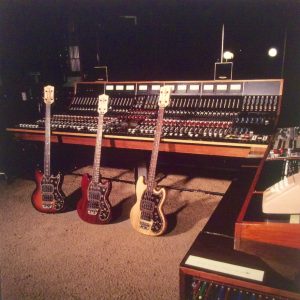 In 1978 Electric Wood Ltd. (based in High Wycombe) was formed and began production of the Wal ‘Pro’ Bass – the first production line instrument. Early versions featured passive pickups and controls, and a front mounted scratch-plate. A new active circuit was soon developed, and in 1980 the first 20 prototype Wal Custom basses were produced. Now known as the Mark 1 the electronics were designed to be ultra-quiet and housed in a shielded cavity in the back of the body. This new model was championed by many world-class players like Geddy Lee, Mick Karn and Paul McCartney.
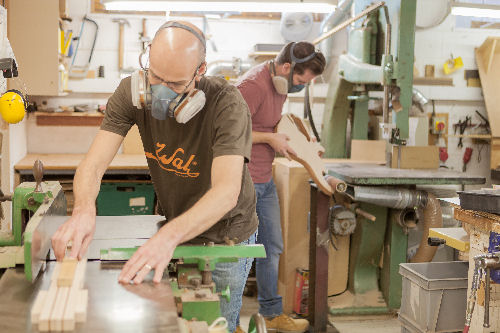 In 1994, prompted by the demands of players, work on the first 6-string bass began. Taking the opportunity to improve still further on the design of the body, the Mark 3 model came into life. 5 and 4-string versions were also introduced.